Monday, January 31, 2011

A Cozy Winter Meal


Welcome back 

Dear Readers,

Dear Friends.


It was a cold wintry afternoon,

and we were 

tired and hungry.


And I knew precisely 

what my friends 

and I needed.


Perhaps you can guess?


Yes, that's right.

A warm 

nurturing meal. 


So 

I grabbed my baking pan

and turned the oven to 350 degrees. 


Into the pan went a few duck legs, that I drizzled 

with olive oil and aceto moscato. 


I sprinkled them with 

sea salt and pepper. 


Threw in

 a halved head of garlic,

a couple star anise,

cinnamon sticks,

and a generous handful of prunes. 


I covered the baking dish

and into the oven this went 

for 1 1/2 hours. 


The house began to smell wonderful

and when the time came,

I uncovered the dish,

and added a couple quartered Bosc Pears. 


Back into a 400 degree oven this went, 

uncovered for another 20 - 30 minutes. 


Could this have been any easier,

or more delicious?


Served on a 

bed of couscous with a

2008 Arterberry Maresh Pinot Noir, Maresh Vineyard


Wine Advocate - Even better is the 2008 Pinot Noir Maresh Vineyard, sourced from 40-year-old vines. Dense ruby red in color, it offers up a sensual perfume suggesting that much more is to come. Asian spices, incense, rose petal, black cherry, and black raspberry aromas lead to a loaded, focused, and impeccably balanced, seamless Pinot...

my friends and I 
warmed to a stunning glow and couldn't have been happier.

Thursday, January 20, 2011

Mary, Mary, quite contrary...


Welcome back Dear Readers.

Riddle me this...


What do 

the painter 

Georgia O'Keefe,


author

Louisa May Alcott, 


naturalist

Charles Darwin,


and author

Frank McCourt,


have in common?


They all suffered from,

but survived,

typhoid. 


One brilliant artist 

who wasn't so lucky...


the very talented 

young composer

Guillaume Lekeu,

whose birthday we celebrate today.


He died 

one day after his 24th birthday

in 1894. 


Born January 20, 1870 

in Belgium,

and later moving to Paris,

Lekeu studied with 

Cesar Franck

and Vincent d"Indy.


Lekeu wrote a number of wonderful pieces,

and in 1891

won a second Second

Prix de Rome.


I stumbled upon Lekeu's works

many, many 

years ago. 


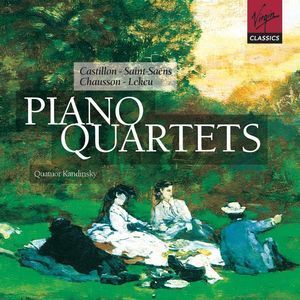
The first recording that I picked up was 

by Quatuor Kandinsky.


It paired 

the Chausson Piano Quartet in A Major, Op. 30

with 

Lekeu's

Quatour Inacheve
Dans un emportemente douloureux


A number of fine recordings of his works 

have become available in recent years,

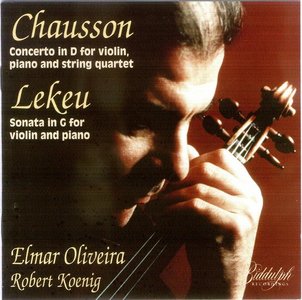
including this one of the 

Violin Sonata in G

 that he wrote for Ysaye,


a recording of his award winning 

cantata Andromede,


music for

Piano Trio,


and for

Piano Quartet.


You will enjoy paying tribute 

to this fine young composer.


Make a point 

of exploring the works 

of this great talent,

who left us 

way too soon.


Happy Birthday Guillaume!


Saturday, January 8, 2011

One of My Favorite Recordings of 2010


Social Realism

in 

Art

can be awfully sad. 


Consider all the depictions

of a

"sick child"

that we have seen over the years. 


And now in the theaters

we can watch 

Nicole Kidman 

in Rabbit Hole

which

"focuses on a grieving couple
eight months after their young son was killed by a car
while chasing his dog into the street."


In

Lars von Trier's

grim

Antichrist,

a DVD I could not finish,

Charlotte Gainsbourg and Willem Dafoe,

also attempt to

deal with their

young son's death.


How sad that

we are focused on this

terrible subject.


That said,

tragedy can inspire great Art,

and that is the case with

 one of my favorite recent recordings. 


On October 7, 2007

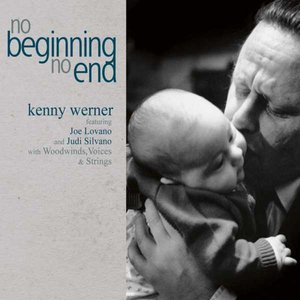
Kenny Werner's 

daughter 

was killed 

in a car accident. 


One of the ways Kenny tried to deal with this 

was by writing a poem

that then became

his brilliant

five-movement work

No Beginning No End.


"The score was radically revised in 2009 and included sections for brass, strings, and percussion. It was recorded by a 37-piece ensemble and his piano. Vocalist Judi Silvano and saxophonist Joe Lovano overdubbed their parts onto the finished work. The poem that serves the root of this piece is gorgeously delivered, one note per word by Silvano. That note becomes the root on whichthe ensemble plays Werner's composition, and for Lovano's and Werner's improvisations. Elements of classical music -- Western and Indian -- dialogue seamlessly with jazz and structured improvisation for nearly 50 minutes, creating a work of transcendent spiritual beauty. It ends not with a conclusion, but an introduction to something beyond the confines of the work itself. In addition to "No Beginning No End" (comprised of five separate titles), there are three other pieces written related to it: "Visitation: Waves of Unborn" is a wordless a cappella for a 36-member choir that deals harmonically with the idea of music not as a noun but as a presence created by the souls dwelling between death and rebirth in the bardo. "Cry Out" was written as a simple, direct, and deeply emotive piece for a string quartet. Less than seven minutes in length, it is nonetheless one of the most memorable works Werner has ever composed; its entwining lyric lines willhaunt the listener long after it ends. "Coda" closes the disc; a spacious yet flowing six-and-a-half improvisation for piano, marimba, vibraphone, and harp, based in the E Mixolydian scale. Taken as a whole, No Beginning No End is a work for which there is no comparison, and few referents. Born of grief, it reflects only beauty, poetic and profound; it is Werner's master work." 

This is thoughtful,

intelligent 

music

with great writing 

and ensemble playing.


Do not miss this.


Saturday, January 1, 2011

My First Music of The New Year - A Dream of Love


Dear Friends,

Dear Readers,

Happy New Year to all!


I'm hoping that your New Year 

is filled with great Music, Art, Cuisine, 

friends and family. 


When I awoke this morning 

I had the gorgeous songs of Gabriel Faure in my head. 


One of the first songs that I heard 

in this New Year of ours was 


Reve d'amour 


sung by Dame Janet Baker 

with pianist Geoffrey Parsons. 


A sweet start to the New Year. 


Reve d'amour

If it is a nice lawn
That sky sprinkles
Where to be born in all seasons
Some flowers bloom,
Where we gather by the handful
Lily, honeysuckle and jasmine
I want to make the path


Where your foot lands.
If there is one well within magnet
Which has the honor,
Whose tender devotion
Has nothing morose
If ever in this noble
Fighting for a worthy purpose,
I want to make the cushion
Where your brow arises.


If it is a dream of love
Fragrant pink
Where one finds every day
Some sweet thing
A dream that God blesses,
Where the soul is united to the soul,
Oh, I want to make the nest
Where your heart arises. 


Sweet.


Sunday, December 19, 2010

The Worst of 2010 - What A Waste


Welcome Back 

Dear Readers,

Dear Friends.


A month ago 

I read a review 

in 

The Washington Post 

by 

Chris Richards.


Chris wrote of an

"epic" recording,

of a "gorgeous" world,

by a "petulant genius"! 


This was Music,

 he added,

 that

"may define our time".


I for one certainly hope that it doesn't. 
To me this recording could not have been any less interesting. Most of the tunes seemingly constructed from one boring drum machine riff or another. There is no interesting variation in melody, rhythm, harmony, or dynamics. The lyrics, made up primarily of angry ranting, includes the singer telling the listener to "kiss my ass" etc... This seems to be sounds meant to accompany a thug. There is no beauty, no harmony, no love, no subtlety, no interesting lyrics or dialogue among musicians, singers, or characters... 
There was one rather pretty cello interlude. 
That was it. 
All in all, this recording is a waste of space and will take up no room in my library. 


Chris's article is pure hyperbole, made even more absurd by the fact that he compares this dreadful noise of no redeeming quality, to the great Art of The Beatles. Comparing his "resonant bloom-blap" to the fine crafting of tunes that have already been enjoyed by generations from all over the world. Think of all the great tunes The Beatles have written. The beautiful lyrics of love, politics, and fun. 
Creativity oozed out of them as they evolved from style to style.
 They defined the spirit of the time and led so many throughout the world into the future.
 I appreciate the sentiment of "All You Need Is Love" . 
Sadly, I have no love for Kanye West and his dreadful "My Beautiful Dark Twisted Fantasy". 
A fantasy he should've kept to himself.


Sunday, November 28, 2010

Haruki Murakami's Norwegian Wood - The Film


Haruki Murakami 

is 

one of my favorite authors. 


I've read 

and loved 

most of his works. 


And I enjoyed the film

Tony Takitani

which is based on 

one of his stories.


I was thrilled 

to see that 

Norwegian Wood 

has been made into a film. 


Here's how Publisher's Weekly describes the story:


In a complete stylistic departure from his mysterious and surreal novels (The Wind-Up Bird Chronicle; A Wild Sheep Chase) that show the influences of Salinger, Fitzgerald and Tom Robbins, Murakami tells a bittersweet coming-of-age story, reminiscent of J.R. Salamanca's classic 1964 novel, LilithAthe tale of a young man's involvement with a schizophrenic girl. A successful, 37-year-old businessman, Toru Watanabe, hears a version of the Beatles' Norwegian Wood, and the music transports him back 18 years to his college days. His best friend, Kizuki, inexplicably commits suicide, after which Toru becomes first enamored, then involved with Kizuki's girlfriend, Naoko. But Naoko is a very troubled young woman; her brilliant older sister has also committed suicide, and though sweet and desperate for happiness, she often becomes untethered. She eventually enters a convalescent home for disturbed people, and when Toru visits her, he meets her roommate, an older musician named Reiko, who's had a long history of mental instability. The three become fast friends. Toru makes a commitment to Naoko, but back at college he encounters Midori, a vibrant, outgoing young woman. As he falls in love with her, Toru realizes he cannot continue his relationship with Naoko, whose sanity is fast deteriorating. Though the solution to his problem comes too easily, Murakami tells a subtle, charming, profound and very sexy story of young love bound for tragedy. Published in Japan in 1987, this novel proved a wild success there, selling four million copies. 


I think 

you will love his books

and 

enjoy these movies.


Monday, November 15, 2010

Old Friends, New Friends - The Killer of Little Shepherds


Welcome Back

Dear Readers,

Dear Friends!


I've just finished reading 

Douglas  Starr's


The Killer of Little Shepherds
A True Crime Story
And The Birth
of Forensic Science.


I enjoyed it immensely 

and believe that 

you will too!


It tells the tale of two men.


Joseph Vacher,

who terrorized the French countryside,

killing and violating many

 near Lyon,

during the Belle Epoch.


And of criminologist 

Dr. Alexandre Lacassagne

who was instrumental in 

prosecuting Vacher 

and in the birth of 

Forensic Science. 


Anyone wondering what to read 

after The Millennium Trilogy

would be wise to pick this up!


  From Publishers Weekly


Starr (Blood) eloquently juxtaposes the crimes of French serial killer Joseph Vacher and the achievements of famed criminologist Dr. Alexandre Lacassagne during France's belle époque. From 1894 to 1897, Vacher is thought to have raped, killed, and mutilated at least 25 people, though he would confess to only 11 murders. Lacassagne, who headed the department of legal medicine at the university in Lyon, was a pioneer in crime scene analysis, body decomposition, and early profiling, and investigated suspicious deaths, all in an era when rural autopsies were often performed on the victim's dinner table. Lacassagne's contributions to the burgeoning field of forensic science, as well as the persistence of investigating magistrate Émile Fourquet, who connected crimes while crisscrossing the French countryside, eventually brought Vacher to justice. Vacher claimed insanity, which then (as now) was a vexed legal issue. Lacassagne proved the "systematic nature" of the crimes. Starr, codirector of Boston University's Center for Science and Medical Journalism, creates tension worthy of a thriller; in Lacassagne, he portrays a man determined to understand the "how" behind some of humanity's most depraved and perhaps take us one step closer to the "why."


Monday, November 1, 2010

Old Friends, New Friends - The Don Preston Trio - Transformation


        Imagine Pablo Picasso being widely known only for his "Blue Period", with Galleries, Collectors, Art historians, Writers and the Public, showing only an interest in those paintings, utterly dismissing the rest of his career and life's work. This could be a parallel to the position Pianist, Composer Don Preston finds himself every time he clips on the lapel microphone for an interview, as the three years (1966-69) he spent as a member of Frank Zappa's Mothers of Invention, seem to be the only part of his musical contribution he is asked about.
        It is under the radar, of the Zappaphiles, that Preston's depth as an improvising artist lies. Growing up in a musical family, (Preston's father was composer in residence and director of the Detroit Symphony) by his 20's he had developed a technique at the Piano and Upright Bass so prodigious, that he was working with Yusef Lateef, Herbie Mann, Tommy Flannigan ,  and Elvin Jones, and held down the Piano chair for a European Tour by Nat King Cole's Big Band, when Nat, himself a fine pianist, began to focus on the show-biz side of music.
        Mr. Preston blames his penchant for atonal or "outside" music on teachers who would smack the backs of his hands every time he would make a mistake at the keyboard, but one would suspect that working with Zappa and Carla Bley,  likely made an impression too. Compositions by both appear on "Transformation" the 2000 release by the working trio with Bassist Joel Hamilton and Drummer Aaron Cline. Those who have a passion for the piano trio as an art form, won't be disappointed with this disc, as the tradition of interplay between the voices that began with Bill Evan's first trio, continues here,  with perhaps more emphasis on a conversational approach as the Bass, and then the Drums step toward center.
         The Cole Porter standard "I Love You" is presented with it's melody dissected, the harmony removed,  and discussed at length,  with drummer Cline toying with the implications of the phrases while mindful of the silences that separate them, a rare quality for a percussionist given full rein.
         The sparkling quality of the piano as recorded in the studio, the depth of field of the soundstage, will contrast with the Bley texts first put to vinyl in the mid 1960's, and surely Don Preston's  ruminations four decades on,  offer fresh facets of what was already there:  the desire, and determination to do what true artists must do, go where none have gone before.


Many thanks here to

 Global Around Town Senior Music Correspondent

and 

Dear Friend

Don Yaffe

for this contribution. 


His sensitive insights and observations

are always a pleasure to behold.